Guide
When a Spring Breaks in the Cold Here in Fond du Lac
Fond du Lac homes built mostly in the 1960s-70s face a hard freeze-thaw climate that hammers garage door springs. Here's why, and what to do when one breaks.
Local detail
How Local Conditions Play In
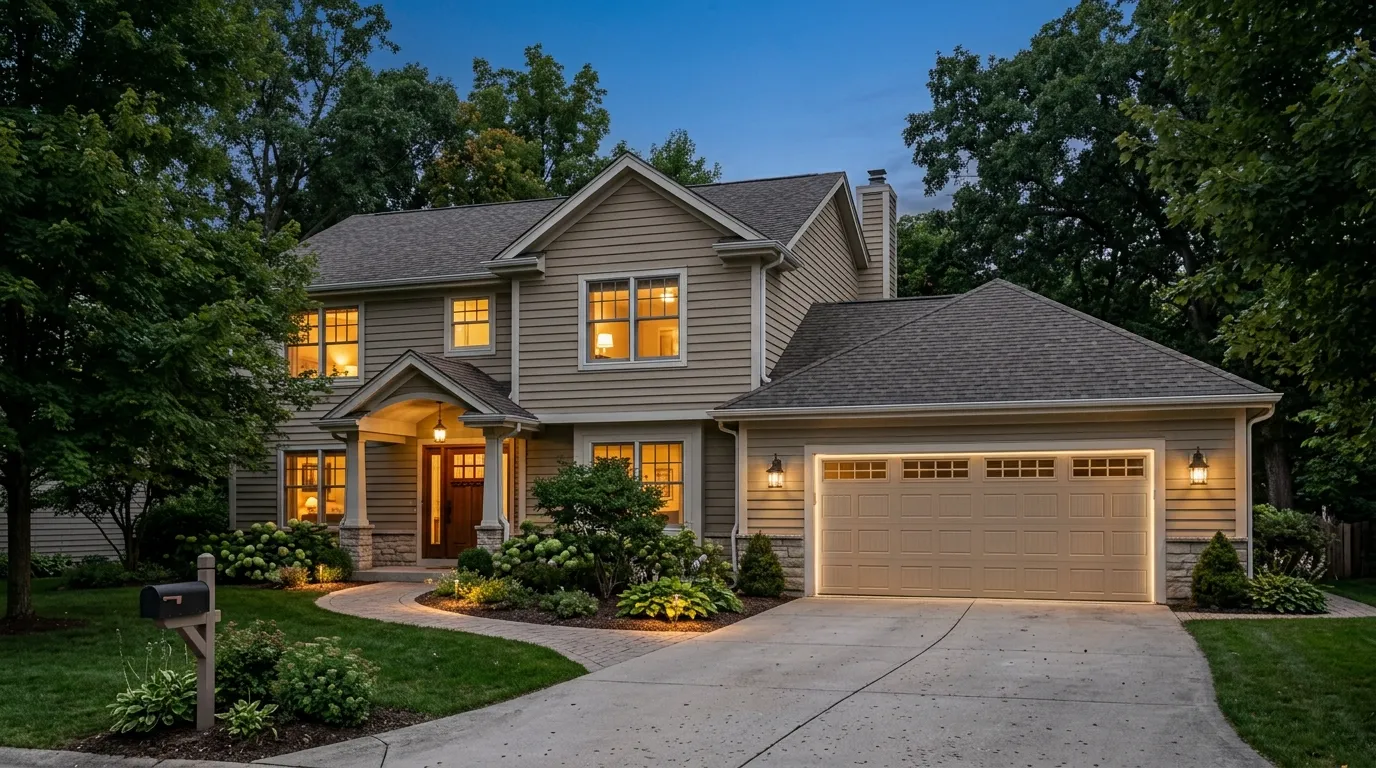
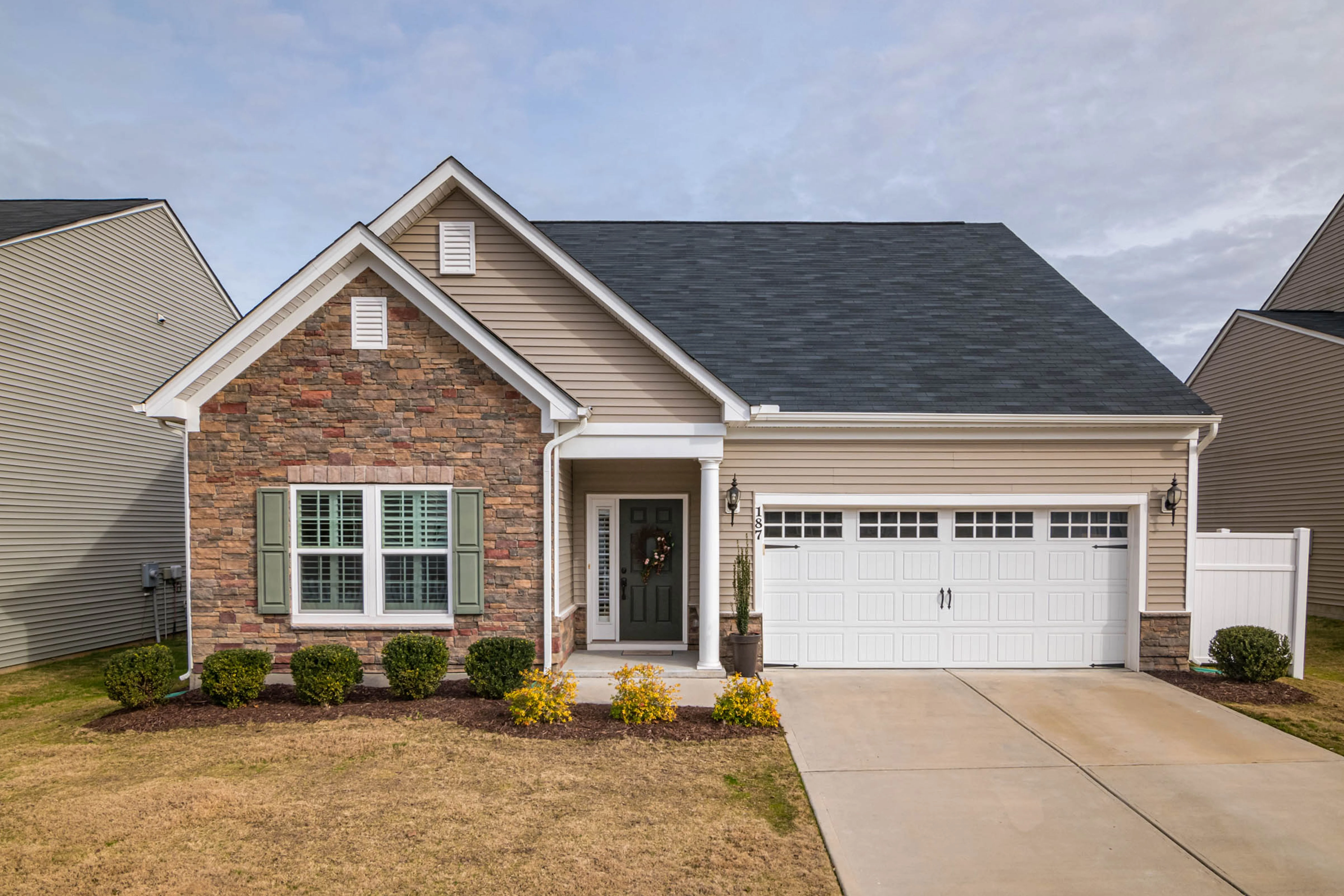
Fond du Lac sits in a cold, severe climate band, and that matters more for a garage door spring than most people think. Steel contracts as temperatures drop, and a torsion spring that's been flexing thousands of cycles a year already has fatigue built into the coil. Add a hard overnight freeze and the metal loses a little give right when the door is loaded the heaviest - usually the first cold snap after a warm stretch, when moisture in the garage has had time to work into the coil finish. Most houses in this area went up between 1938 and 1993, with the bulk of the stock from the 1960s and '70s across the two dozen neighborhoods and nearby towns we work in, from North Fond du Lac out to places like Rosendale and Waupun.
That means a lot of original or first-replacement hardware is now 30, 40, even 50 years past install, sized for a lighter door and never rated for the freeze-thaw cycling this climate puts it through year after year. Cold doesn't cause the break by itself. It's the last stress on a spring that's already tired from decades of Wisconsin winters.
The area
The Problem
A torsion spring under load in cold weather doesn't bend, it snaps. You'll usually hear it - a bang from the garage, sometimes loud enough to bring someone running from another room. After that, the door is either stuck shut, stuck half-open, or it drops fast when someone tries the opener without knowing the spring is gone.
On the older doors common in this area's 1960s-70s housing stock, a single spring is doing all the counterbalance work with no backup, so failure means the door is fully unsupported. That's not a cosmetic problem, it's a several-hundred-pound panel with nothing holding it up but the opener motor, which was never built to lift dead weight. Trying to force it open by hand, or running the opener repeatedly to see if it'll clear the jam, just adds strain to the opener gears and the track brackets, and on a house this age those brackets are often original too.
What we find
When It Stops Being a DIY Job
A broken torsion spring is not a tighten-a-bolt repair. The remaining spring, or the wound-up half of a broken one, holds enough stored tension to break a bone or worse if it's unwound wrong, and winding bars for older, heavier coils aren't something most homeowners have sitting in a drawer. This is one of the clearer honest limits in this business: if the spring gauge or drum on your door doesn't match anything on the truck that day, it may mean a short wait on parts rather than a same-visit fix, especially on the heavier torsion setups still found on original doors from the 1960s and '70s.
That's a real limitation, not an excuse - some of this housing stock used spring sizes that aren't standard stock anymore. If the door won't move, or moves unevenly with a visible gap in the coil, leave it alone and call rather than testing it.
How we work
Checking It Yourself
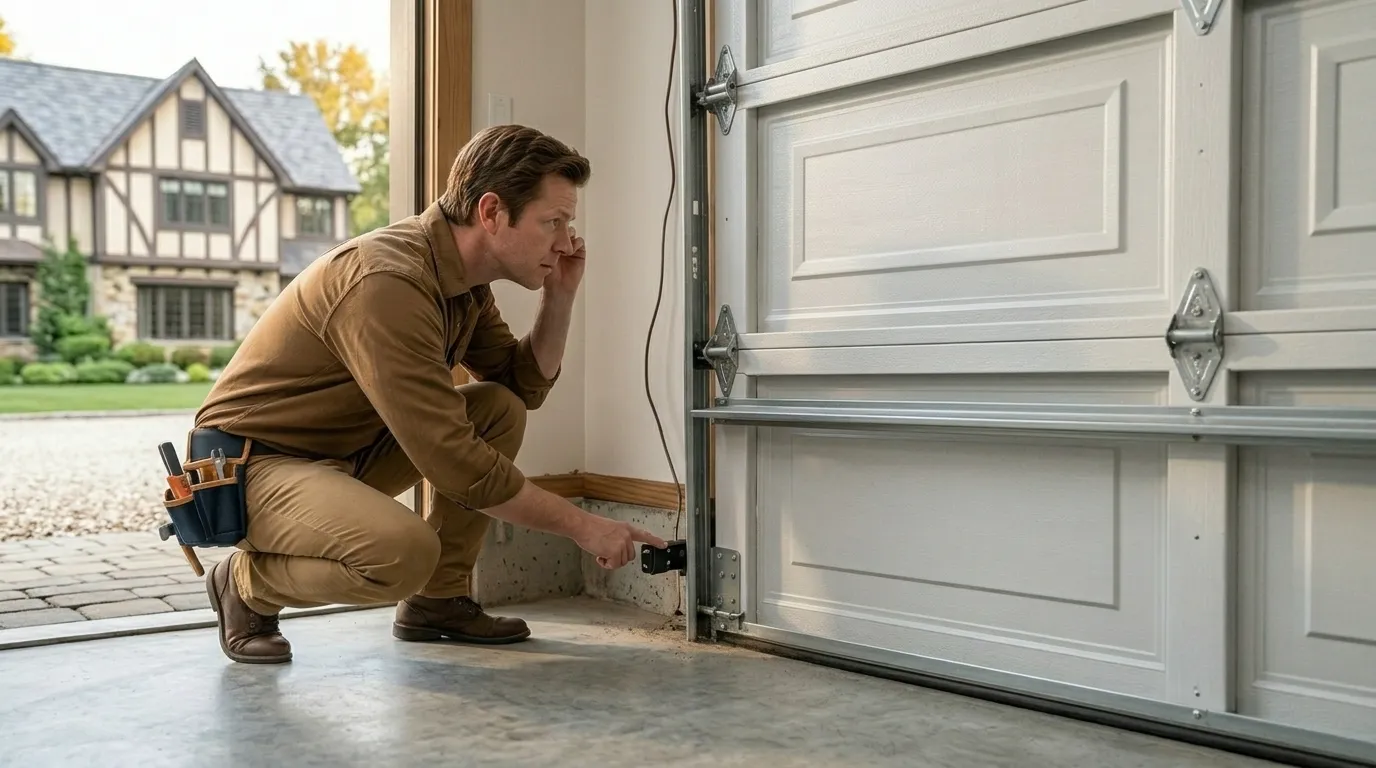
Before you call anyone, you can look - just don't touch the spring itself. With the opener disconnected (pull the release cord), check whether the door is heavier on one side when lifted a few inches by hand; an even, two-spring door should feel balanced. Look at the coil above the door for a visible gap, which usually means a full break rather than a weakened spring. Cold makes lubricant stiffen too, so if the door is just sluggish rather than jammed, that can be a track or roller issue instead of a spring failure - worth ruling out before assuming the worst.
If you see a clean break in the coil, stop there. Don't run the opener, don't wedge the door, and don't try to rewind anything by hand. That's the point where a cold-weather spring failure needs a truck, not a wrench.
Questions
Common questions
Why do springs seem to break more in winter here?
Cold makes steel less flexible right as the spring is under its heaviest daily load. In this climate band, springs that have already fatigued over years of cycling are more likely to give out during a hard freeze than during warmer months, especially in older torsion setups common in this area's housing.
Is it safe to open the door manually after a spring breaks?
You can lift it slowly to check balance with the opener disconnected, but don't force it if it feels heavy or uneven. A broken spring means the door has no counterbalance, so lifting it fast or letting it drop can damage the track or hurt someone.
How old does a spring usually get before it fails?
It depends on cycle count and conditions more than a fixed number of years, but a lot of the springs failing now are original to houses built decades ago, which puts many of them well past a normal service life for this climate.
Ready when you are
Need a garage door sorted in Fond du Lac?
Fond du Lac Garage Door Pros repairs and installs garage doors, springs and openers in Fond du Lac, WI and the surrounding area.