Guide
Is Your Old Fond du Lac Garage Door Worth Repairing, or Time to Replace
Most Fond du Lac garage doors date to the 1960s-70s boom. Here's how our cold winters and that housing stock decide if a repair still makes sense.
Local detail
How Local Conditions Play In
Fond du Lac sits in a severe cold climate band, and that changes the math on an old door in a way a mild-winter town never has to think about. Steel panels built before the 1990s were not engineered with the thicker insulation or the weatherstripping standards common now, so on a door that's already 40 or 50 years old, you're fighting condensation, ice buildup on the bottom seal, and hardened lubricant in the same season. Across the 24 named areas that make up this housing stock, most homes went up between 1938 and 1993, with the median landing around 1970.
That means a huge share of doors in this market are original or close to it, on hardware sized for a lighter, thinner panel than what's sold today. Cold makes steel brittle and grease thick. A spring that's been fine for a decade can snap on the first sub-zero morning because the metal fatigue that was building slowly finally meets a temperature it can't handle.
If your door groans, hesitates, or reverses on cold mornings before it does anything else, that's the climate talking, not just age. We factor that in before telling anyone to spend money on a repair that a January cold snap will undo anyway.
The area
The Problem
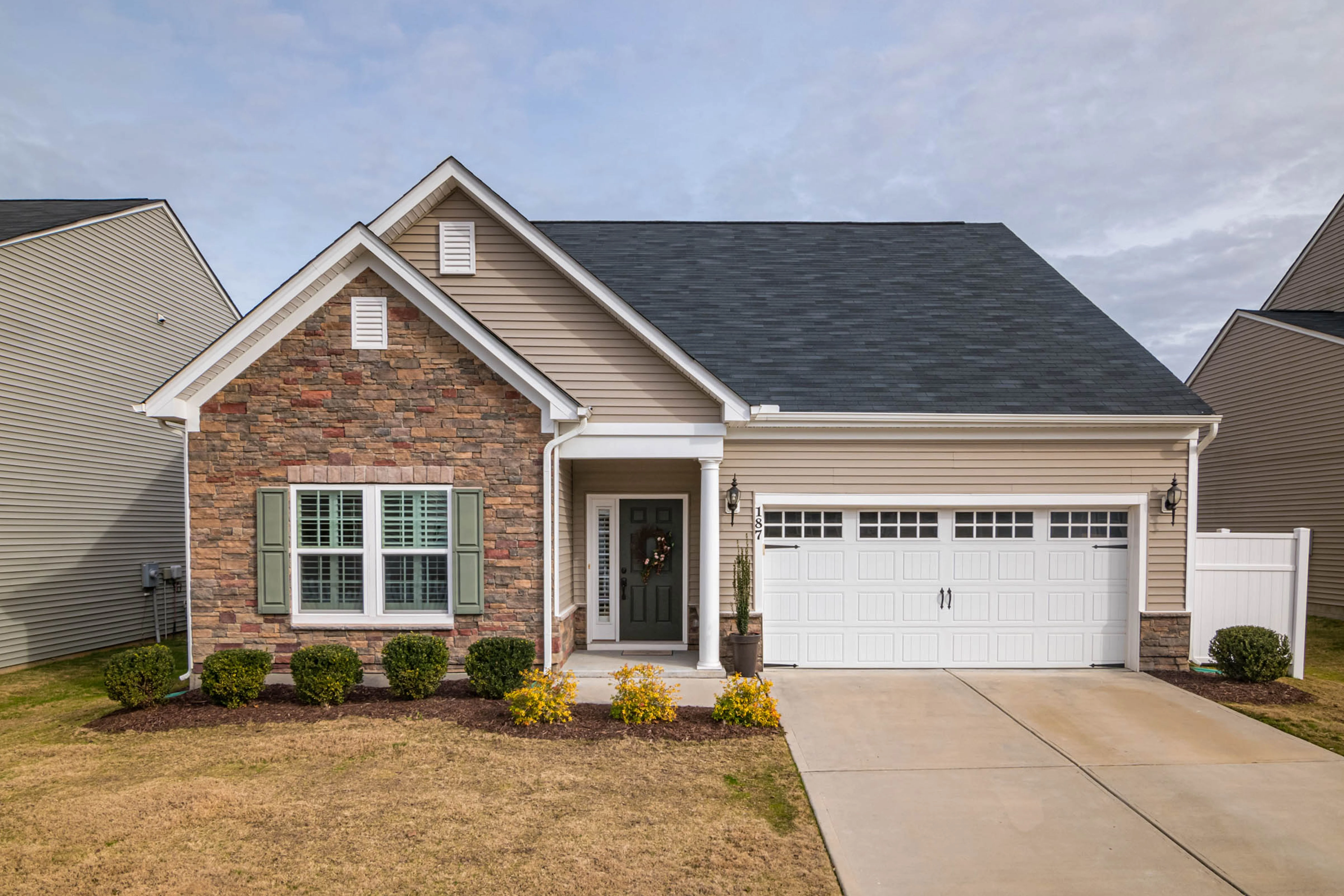
The specific problem with a 1960s-70s door isn't cosmetic, it's parts. A door built to the median 1970 vintage often runs on hardware that hasn't been manufactured in decades: certain track widths, spring wind ratios, and drum sizes just aren't stocked new anymore. When a part fails on one of these doors, we're sometimes matching used stock or adapting a modern part to old brackets, and that adds labor even when the part itself is cheap.
This is common enough in this market, given how much of the local housing falls in that same build window, that it's a routine call rather than an oddity. The other half of the problem is fatigue you can't see: insulation that's compressed flat, panel seams that have flexed through fifty winters, and steel that's thinner at the stress points than it looks. None of that shows up until the door is under load in cold weather, which is exactly when a repair call comes in.
We can patch a lot of it. We can't make a door young again.
What we find
When It Stops Being a DIY Job
A broken torsion spring, a cable that's frayed at the drum, or a bent track are jobs for a call, not a Saturday project - the spring alone stores enough force to break bones, and on an older door with a smaller-diameter shaft, the wind-up numbers aren't always printed anywhere you can read. If your opener is original to a 1970s-era door, the motor and the door were matched for a specific weight and travel, and swapping in a modern opener without checking that balance is how you burn out a new motor in a season. We'll say plainly: if the door is original to a home built well before 1990, and the spring or opener has already failed once, we usually recommend pricing replacement alongside repair rather than assuming repair is automatically cheaper.
Sometimes it still is. Sometimes the labor to keep matching obsolete hardware costs more over two years than a new door would have.
How we work
Checking It Yourself
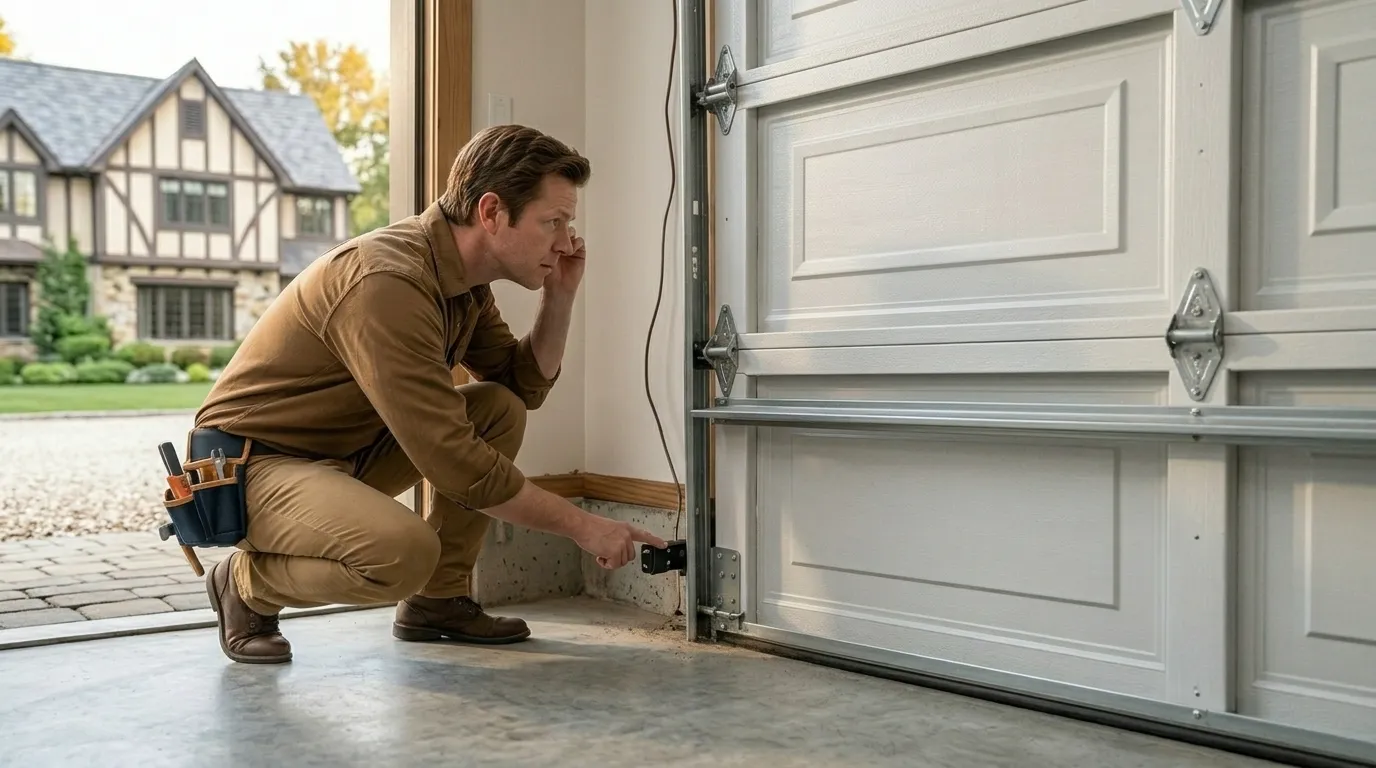
Before you call anyone, there's a few things worth a look. Pull the release handle with the door down and try lifting it by hand - if it's hard to lift past a few feet or drops on its own, the spring balance is off and that's not a lubricant problem. Check the bottom seal for cracking or a gap wide enough to see daylight; on a door built in the cold-climate stock common to this area, a bad seal is often the real source of a drafty garage, not the panel itself.
Look at the track brackets for rust or looseness, especially near the floor where road salt and melt runoff sit all winter. If the door is noisy but moves smoothly and closes flush, that's usually rollers and hinges, a lower-cost fix. If it's quiet but won't sit level, or the opener strains and reverses, that's spring or cable territory and worth a call before you force it further.
Questions
Common questions
Is it worth fixing a garage door that's original to a house built in the 1960s or 70s?
Often yes, if the panel itself is straight and the problem is springs, cables, rollers, or the opener. Where it stops being worth it is when the hardware is obsolete enough that matching parts costs more than expected, which does happen on doors from this era.
Why do old garage doors fail more in winter here?
Fond du Lac sits in a severe cold climate band, and steel hardware built decades ago wasn't designed for today's insulation standards. Cold makes springs and cables more likely to snap and lubricant more likely to gum up, so failures cluster in the coldest months.
Can I just replace the opener on an old door instead of the whole system?
Sometimes. But an opener sized for a 1970s door's weight and balance can be mismatched with a modern motor, and that shortens the motor's life. We check the door's balance before recommending an opener swap on anything original to that era.
Ready when you are
Need a garage door sorted in Fond du Lac?
Fond du Lac Garage Door Pros repairs and installs garage doors, springs and openers in Fond du Lac, WI and the surrounding area.