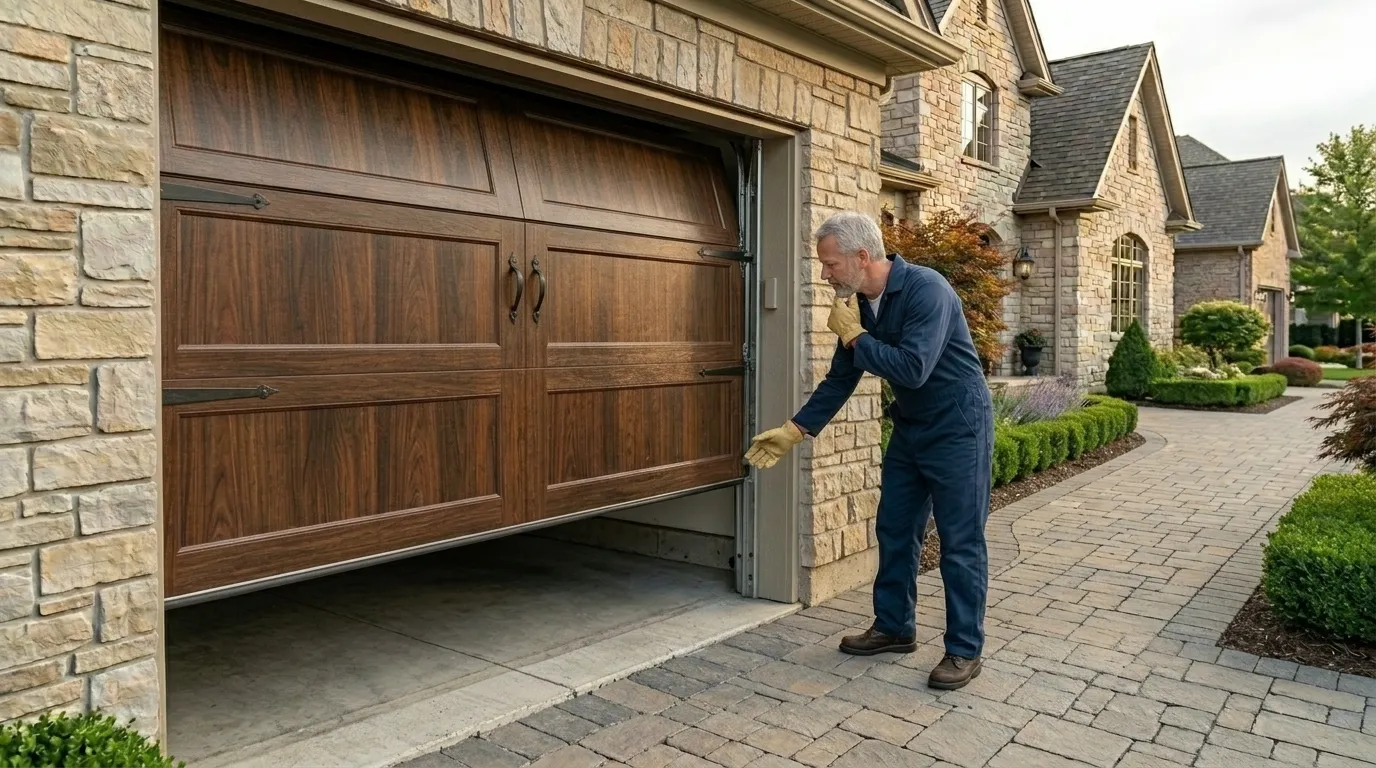
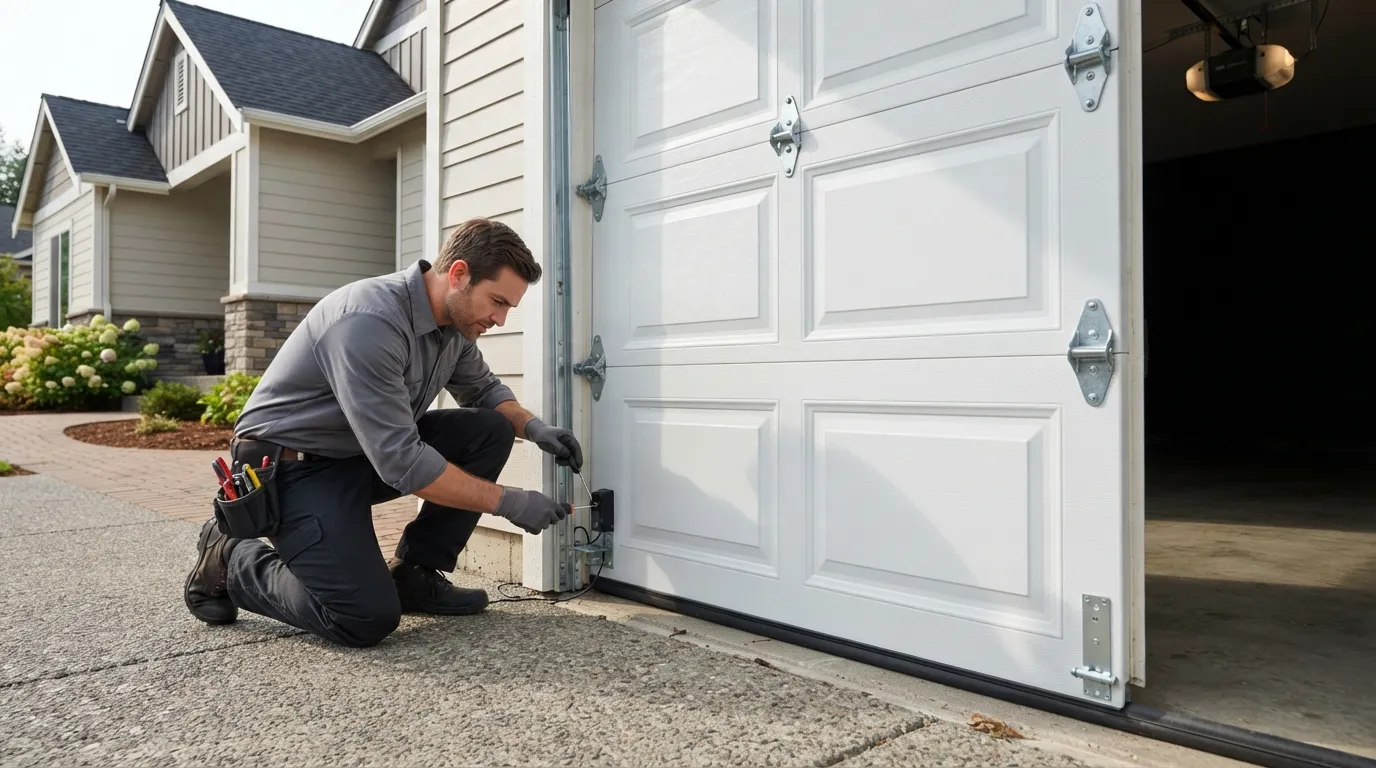
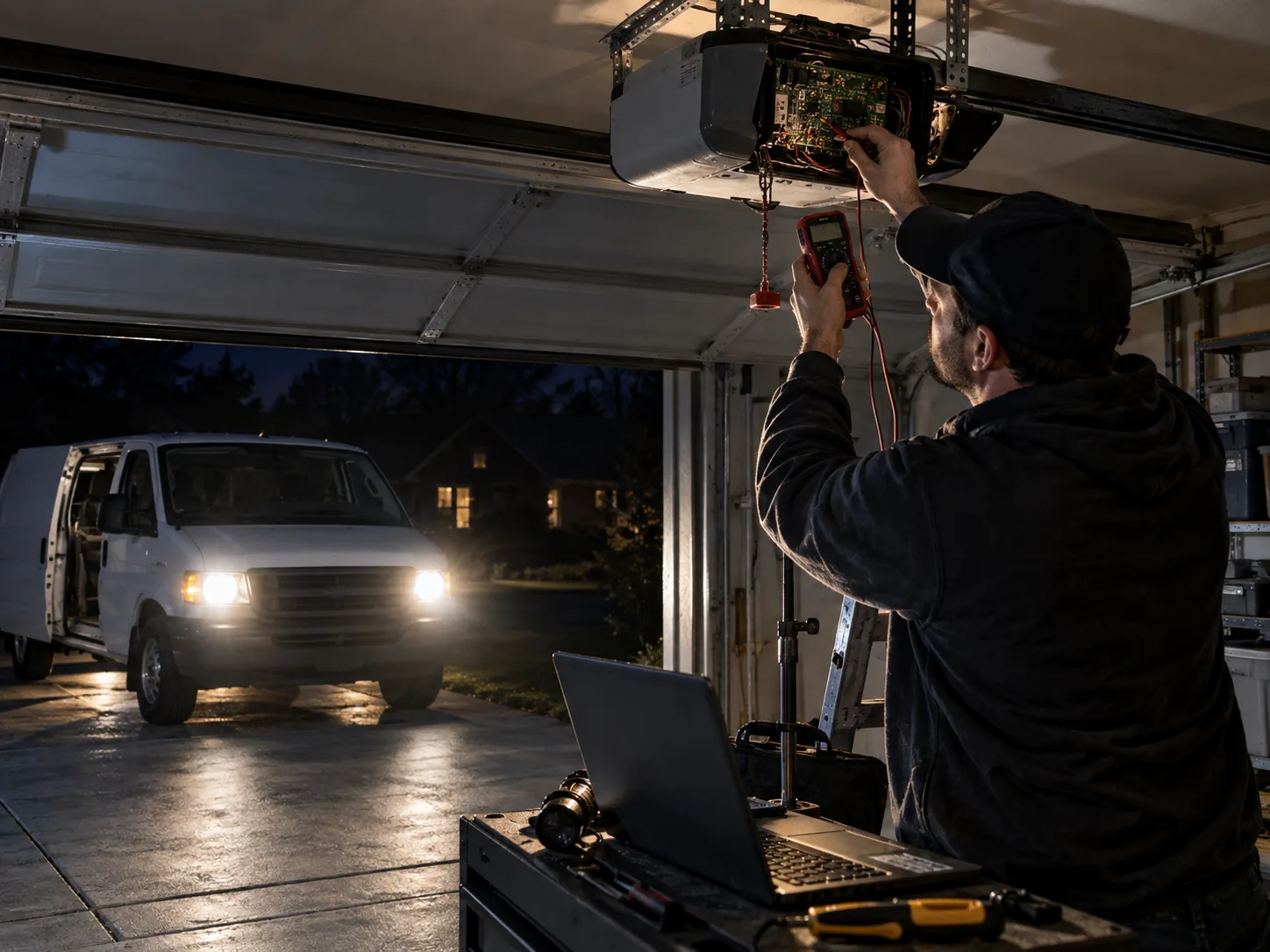
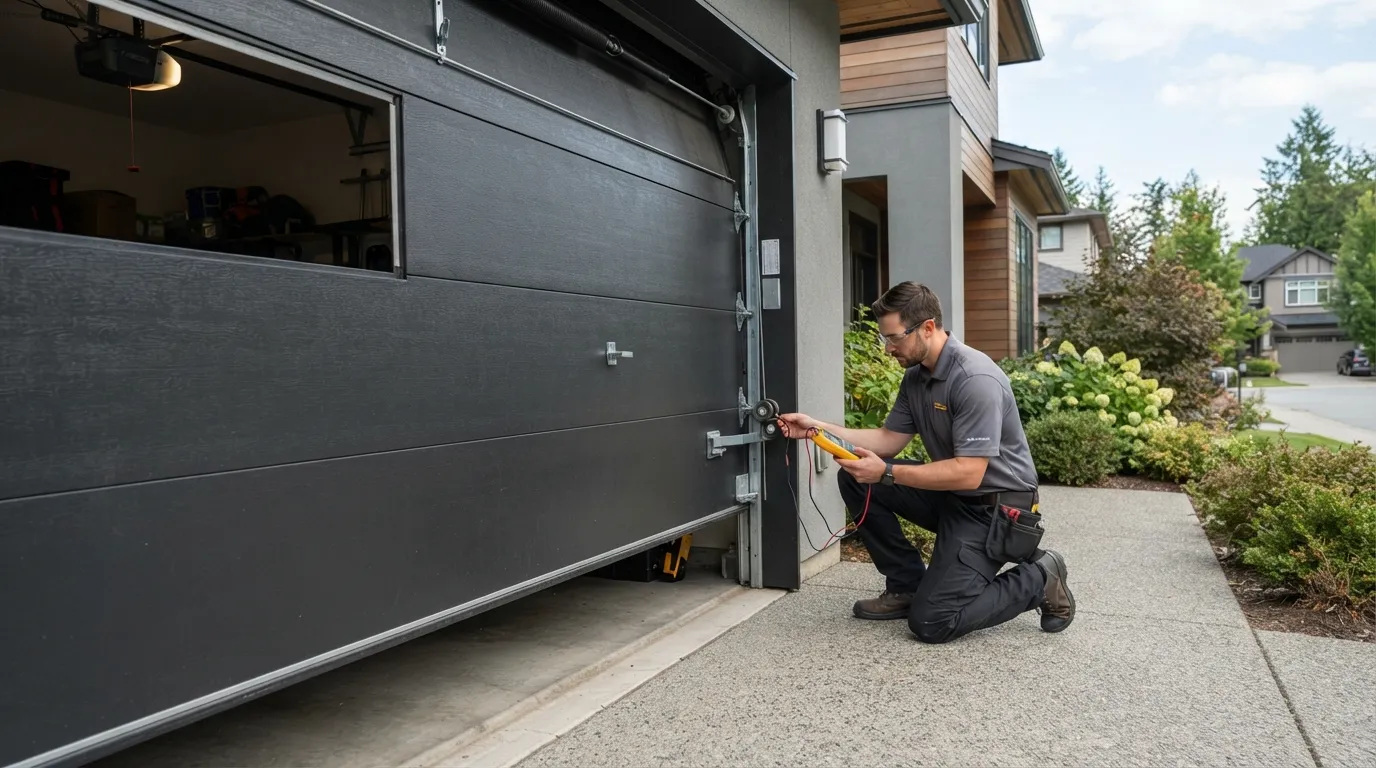
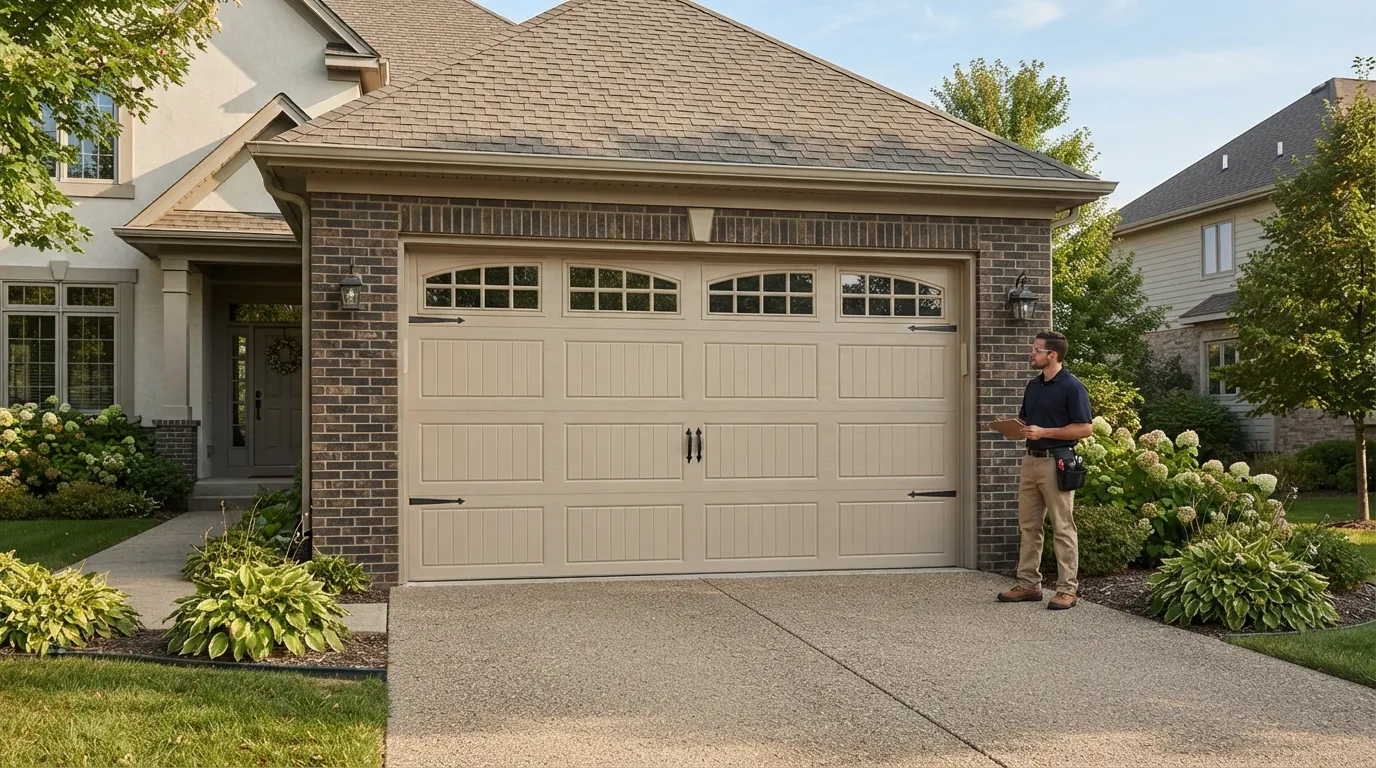
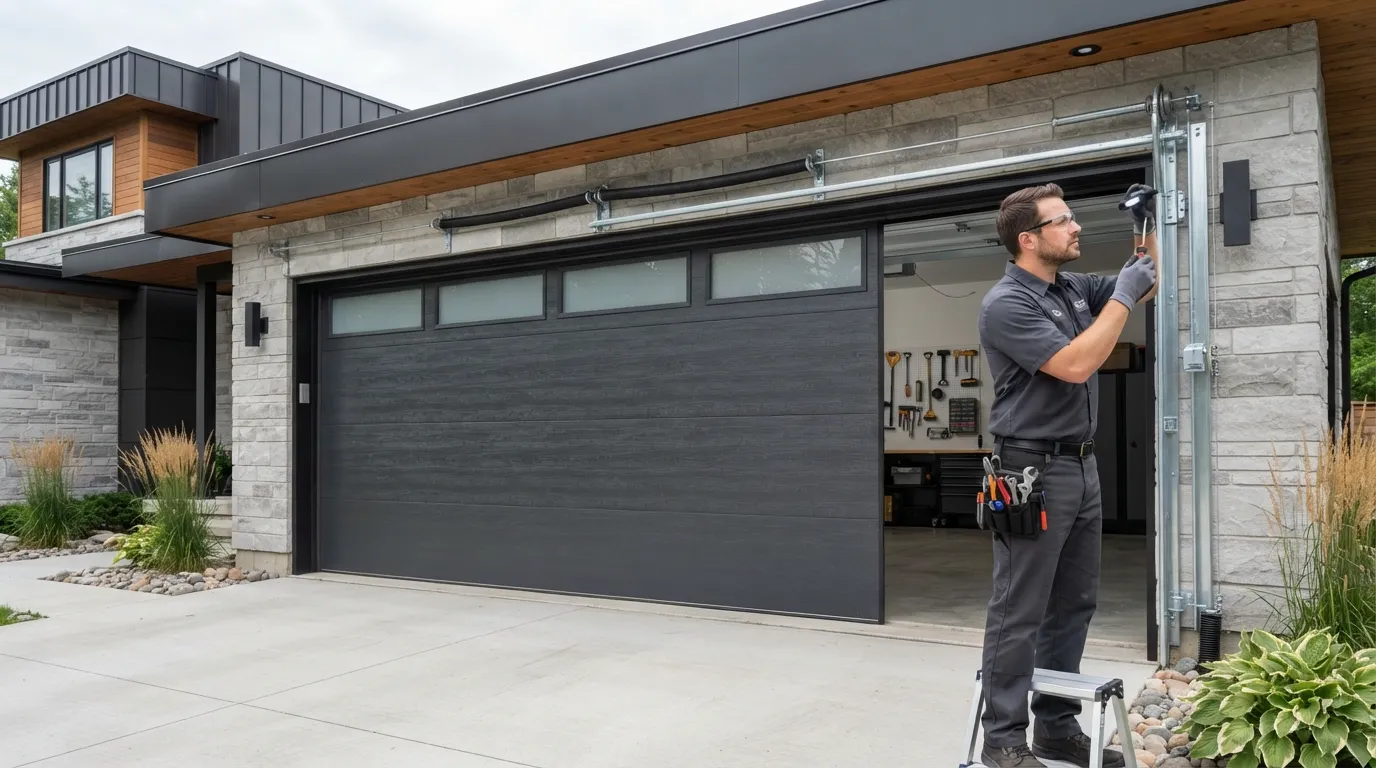
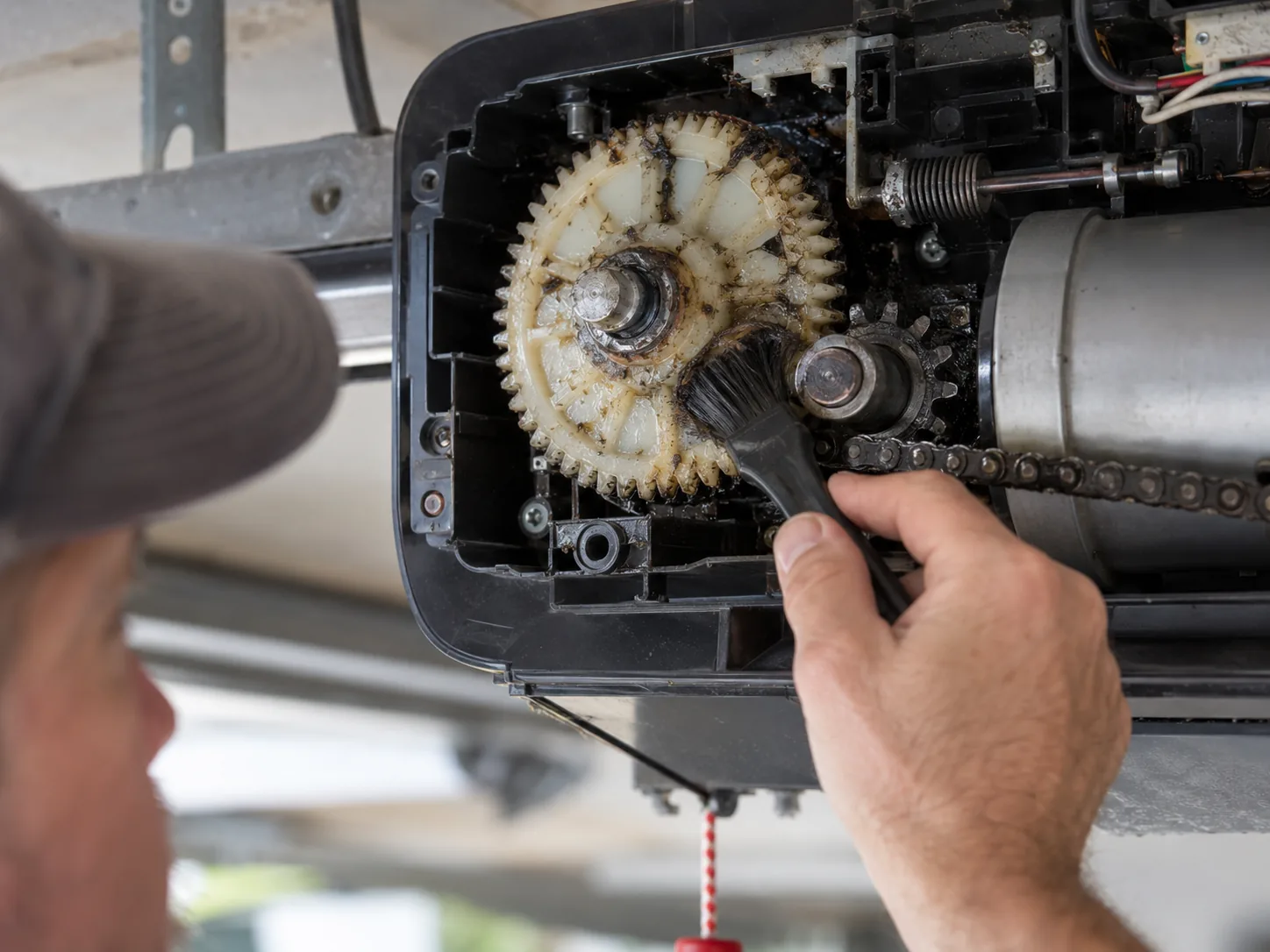
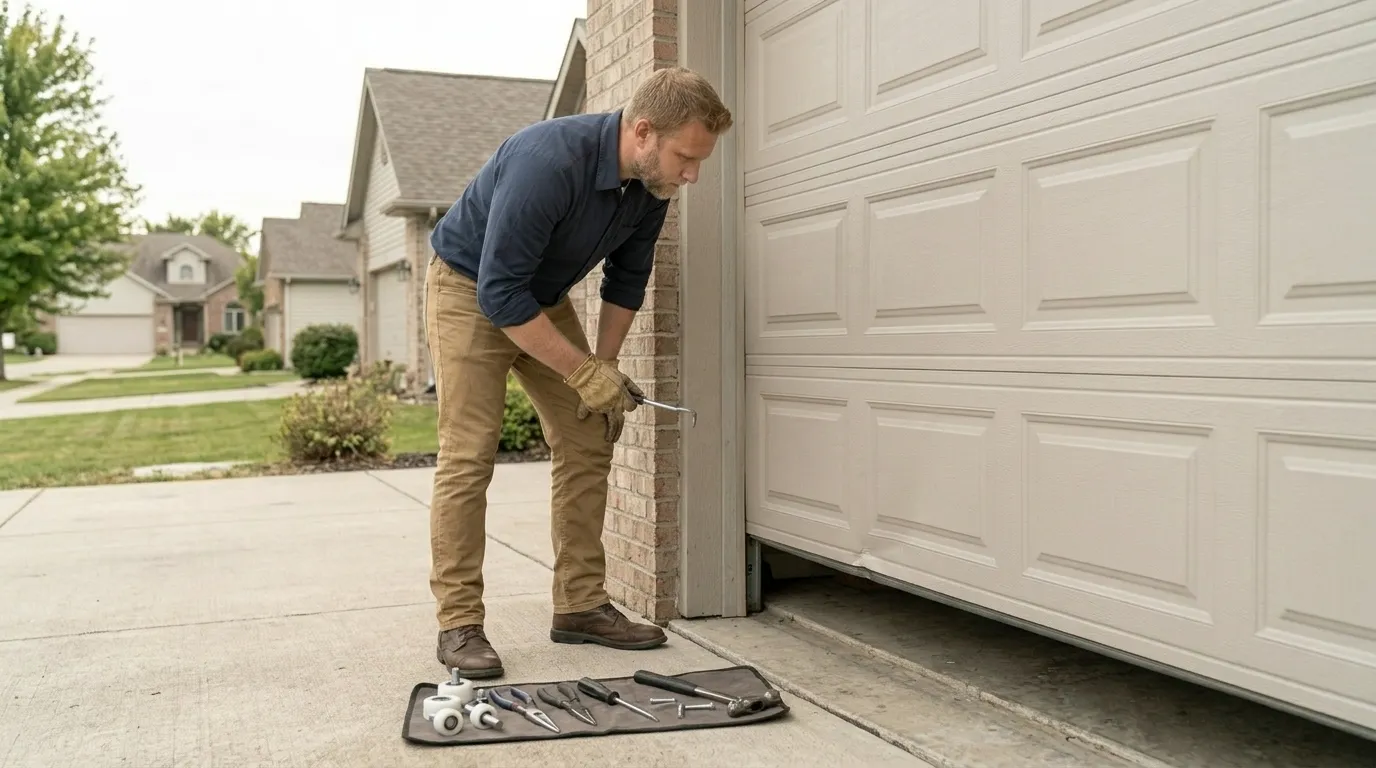
Some of this is fair for a homeowner to check before calling anyone. Look at the springs - if you see a gap in the coil or the door won't stay up on its own at half-height, that's a broken torsion spring, and it's not a DIY repair; the spring is under enough tension to break a wrist. You can safely check the track for visible dents or bends, tighten loose lag bolts on the track brackets, and lubricate rollers and hinges with a garage-door-specific lubricant, not WD-40, which attracts grit. You can also test the auto-reverse safety feature by placing a 2x4 flat on the ground under a closing door - it should reverse on contact. What you shouldn't do is replace a spring, adjust cable tension, or take apart the opener's gear assembly yourself. Honest limitation: if your door is original to a 1977-era build and the opener has already failed once, we'll usually tell you replacement of the whole unit makes more sense than a second repair - a new opener costs less over time than nursing a forty-plus-year-old motor along.