Short distance affects diagnostics
That short drive matters because it means we can carry a second option in the truck without burning half a day on the road, but it also means we don't get a second trip for free if the first diagnosis was a guess.
North Fond Du Lac, Fond du Lac
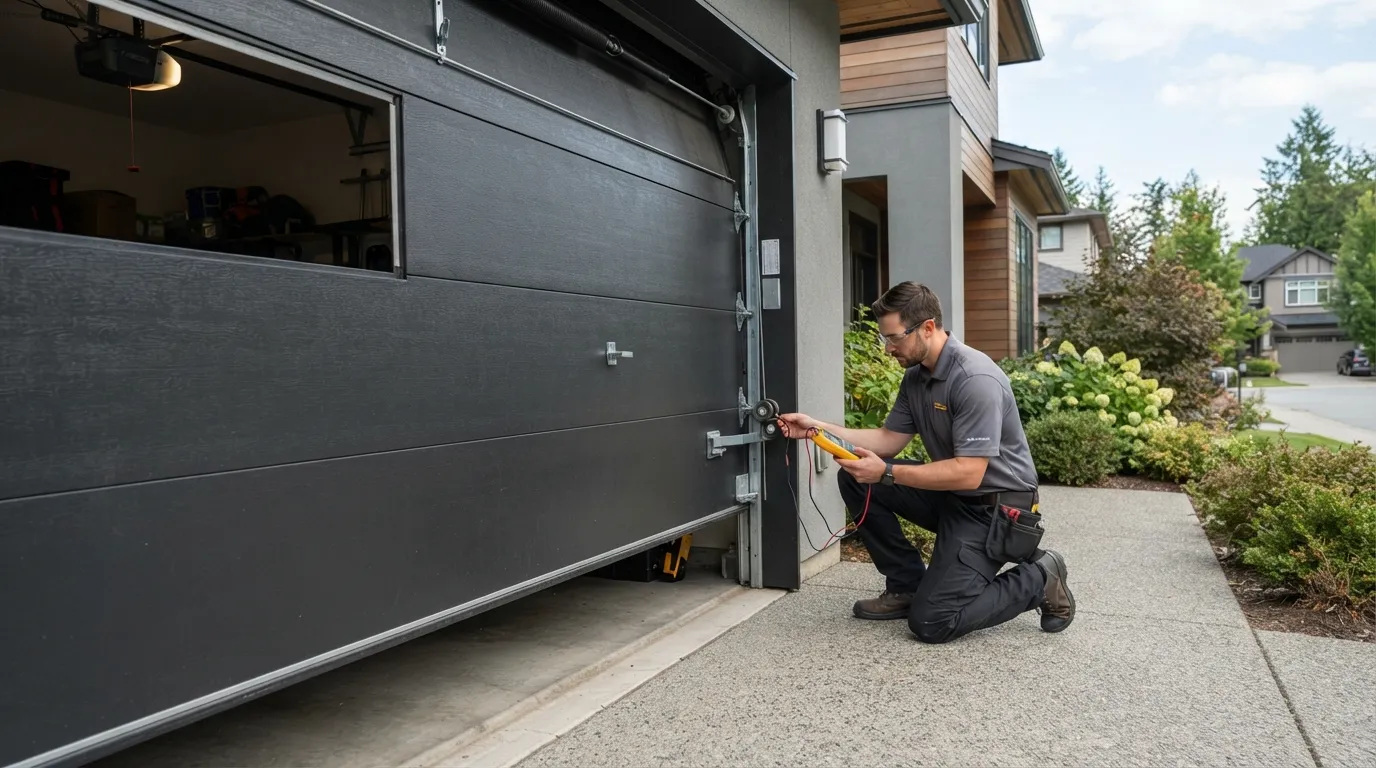
Garage door repair for North Fond du Lac homes, most built around 1977. We drive the 4 miles from Fond du Lac to fix springs, openers, and tracks on this housing stock.
Watch-outs
It's a four-mile run from our shop in Fond du Lac to North Fond du Lac, which sounds like nothing until you're the one standing in a driveway realizing the part you loaded isn't the part this door needs.
That short drive matters because it means we can carry a second option in the truck without burning half a day on the road, but it also means we don't get a second trip for free if the first diagnosis was a guess.
Most of the calls out here aren't emergencies in the dramatic sense - a spring that finally let go on a cold morning, an opener that's been grinding for two weeks before it quits. The fix usually isn't complicated. What makes it go sideways is when someone assumes the hardware is the same as whatever's in a house across town, orders the wrong torsion spring size, and now the door sits open for another day.
With median household income here at $61,744, a repeat trip for a wrong part isn't a small thing to eat. We'd rather get it right off the truck the first time, even if that means asking a couple more questions on the phone before we head over.
Warning signs
Houses in this pocket of the service area tend to date to around 1977, right in the middle of the broader 1960s-70s stock that covers most of these 24 named communities.
That era brought a shift toward lighter steel doors and extension springs mounted overhead rather than the older torsion setups, and after forty-plus years those extension springs are usually the first thing to go. You'll see it as a door that won't stay up on its own, or one that slams down faster than it used to.
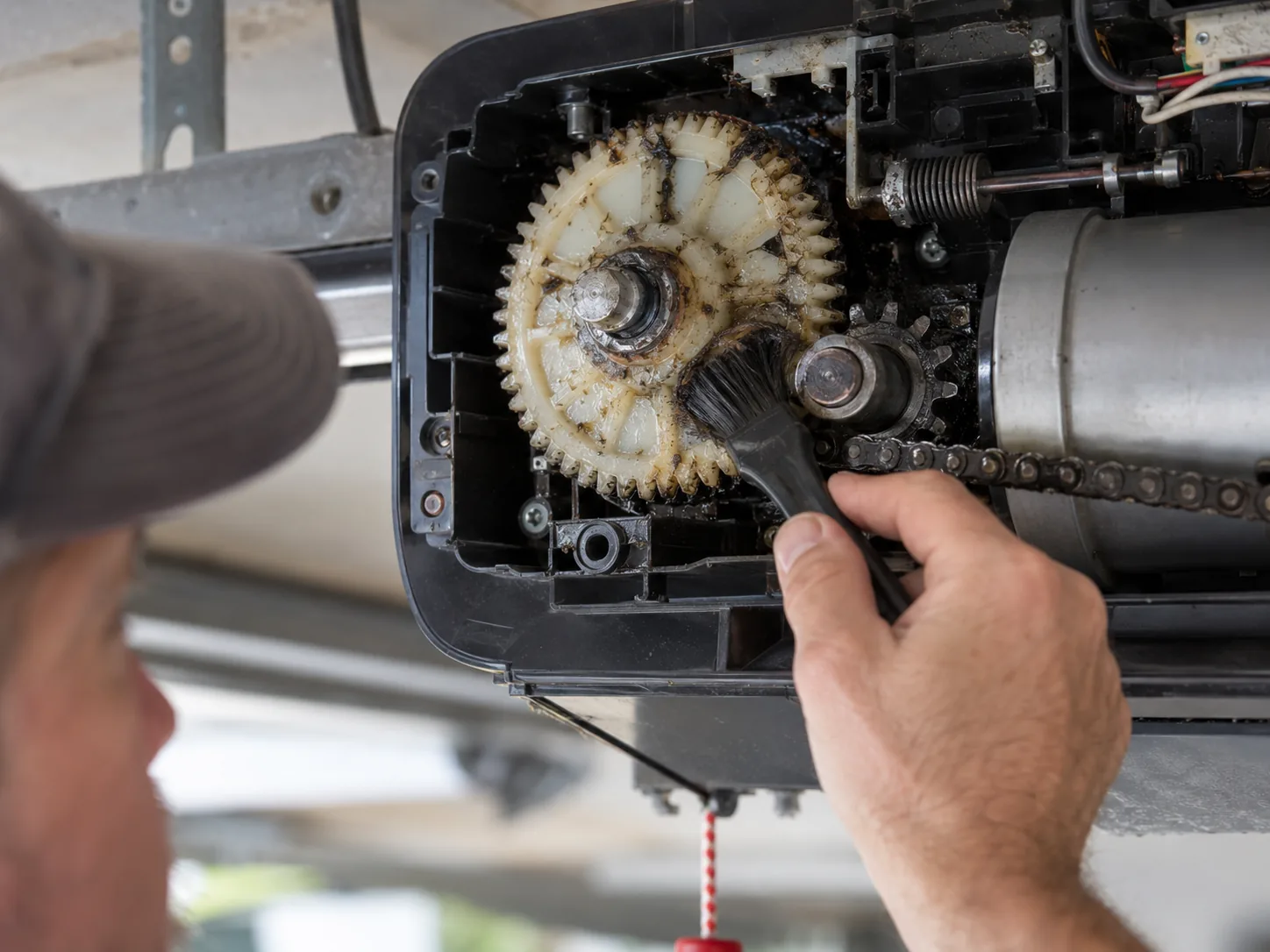
Openers from remodels in the 80s and 90s are common too, and a lot of them are still the original chain-drive units - noisy, but often still working, which is its own kind of problem when a homeowner isn't sure whether to fix it or replace it.
Winters here sit in the severe end of a cold climate band, and that cold is hard on lubrication and on any spring that's already fatigued. A spring that's been marginal all fall tends to fail in January, not July. If your door is groaning more than usual as it gets colder, that's not a coincidence - it's the metal telling you it's near the end.
DIY or pro
Some of this is fair to handle on your own. Tightening loose hardware, clearing the track of debris, lubricating rollers and hinges - that's maintenance, not repair, and it's worth doing before winter regardless of the age of your door. What isn't worth doing yourself is anything involving a wound spring under tension. Extension springs, common in houses from the 1970s stock in this area, store enough force to cause a serious injury if the winding cone slips, and torsion springs are worse. We're not going to pretend there's a safe shortcut here just to sound approachable - there isn't one. The other thing we'd steer you away from is guessing at opener logic boards. If a chain-drive unit from a few decades back is throwing intermittent faults, it's often cheaper and more reliable to replace the whole unit than to chase a part that may not even be sold anymore. That's the honest limit of what a homeowner should tackle alone: cosmetic and lubrication work, yes; anything under spring tension or inside the opener housing, no.
The repair
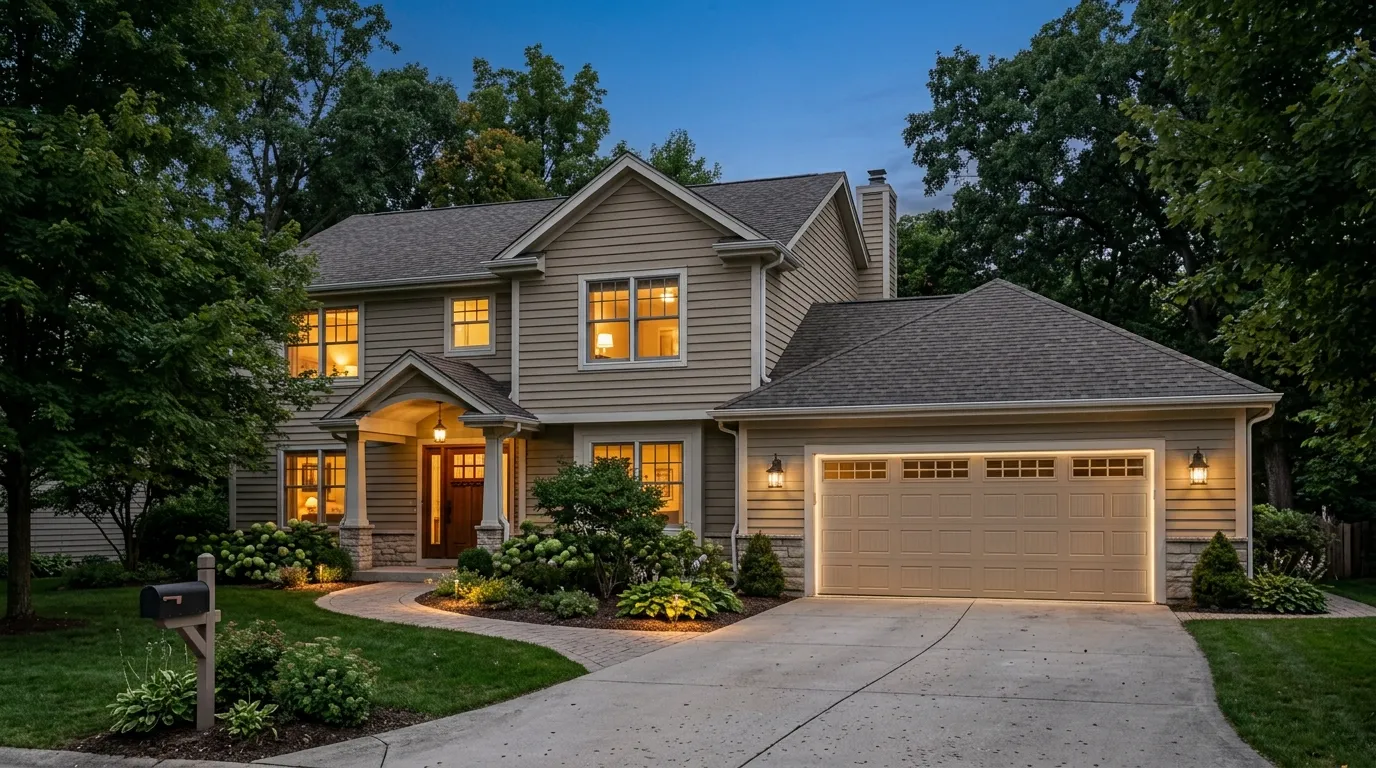
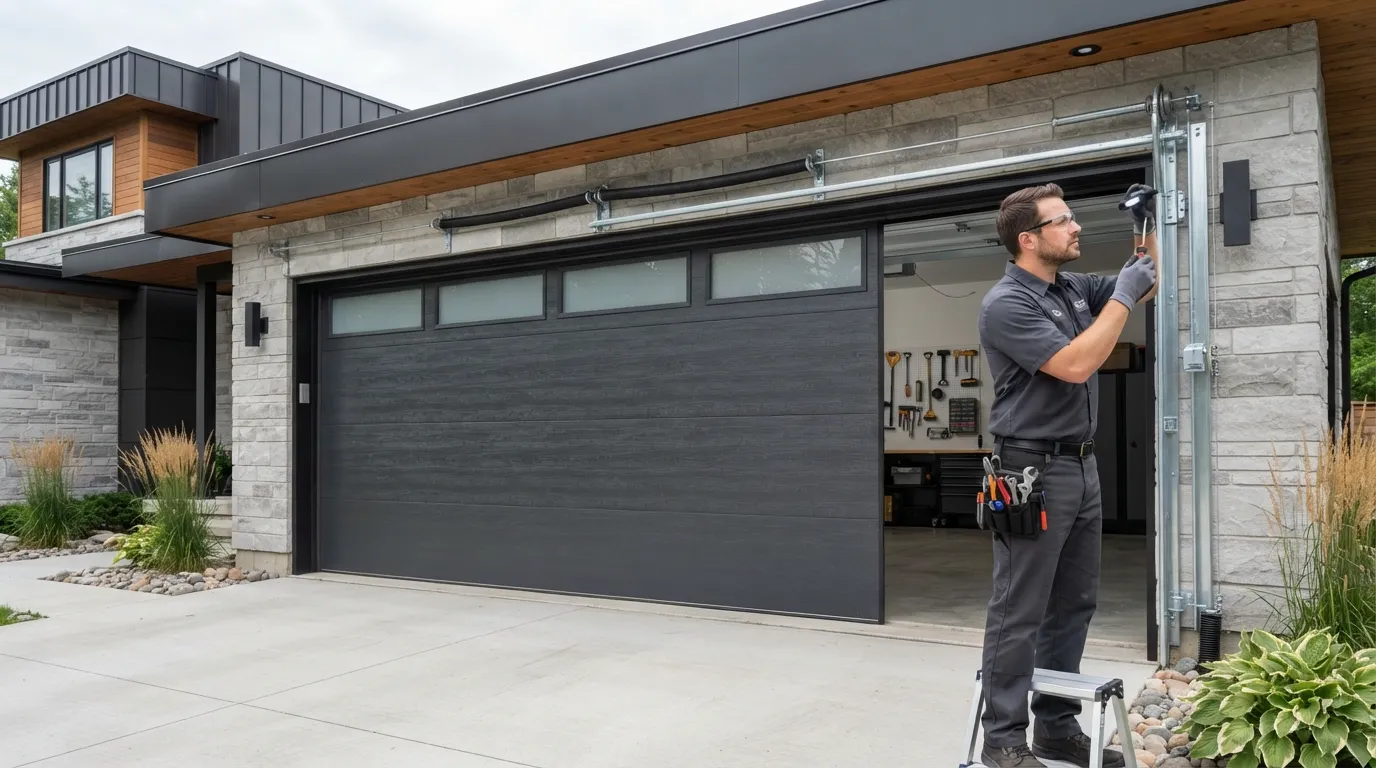
A typical spring replacement on a door from this era starts with matching the wire gauge and wind direction to the existing hardware, not just grabbing a stock size - extension springs from the 1970s don't always match what's on the shelf today.
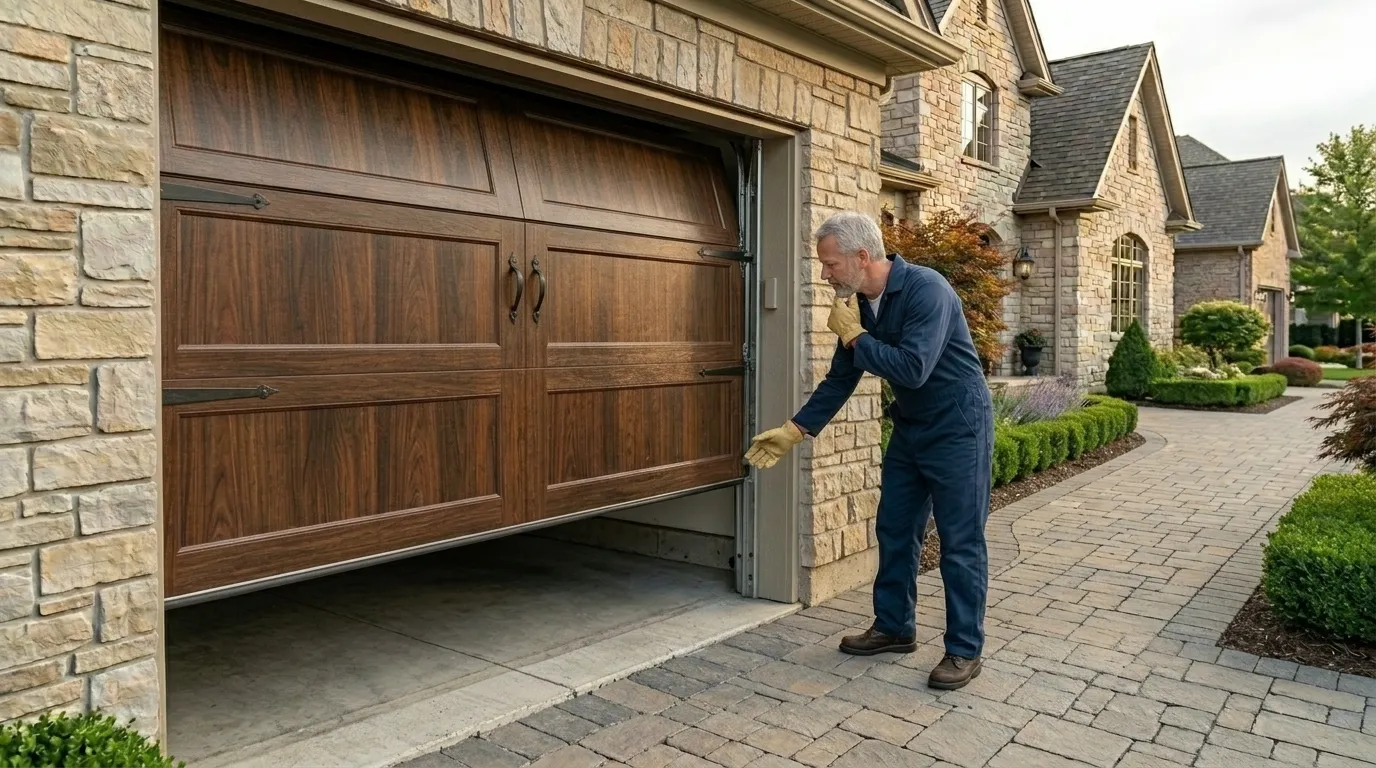
We bring both common sizes on calls out this way since a second trip costs more than the extra weight in the truck. Track alignment work is usually straightforward on these single-car and two-car door widths, but if a panel's been dented from years of a car bumper clipping it, we'll tell you plainly whether a panel swap makes sense or whether the door's age means full replacement is the better money.
With roughly 2,150 households in this immediate area and a housing stock that skews older than newer construction across the wider region, we see a fair number of doors that are structurally fine but running on original hardware that's simply worn out.
The job is rarely glamorous - a new spring, a lubricated track, an opener sensor realigned - but getting the size and tension right the first time is what keeps the door working through the next cold stretch instead of failing again in a month.
Questions
It's about 4 miles from our location in Fond du Lac. We travel out for repair calls; there's no separate branch here. That short distance is why we can carry backup parts on most jobs without it costing extra time.
This area sits in a cold climate band with severe winter conditions, and cold makes fatigued springs more likely to snap rather than just stretch. A spring that's been marginal for months often finally lets go on the coldest mornings of the year.
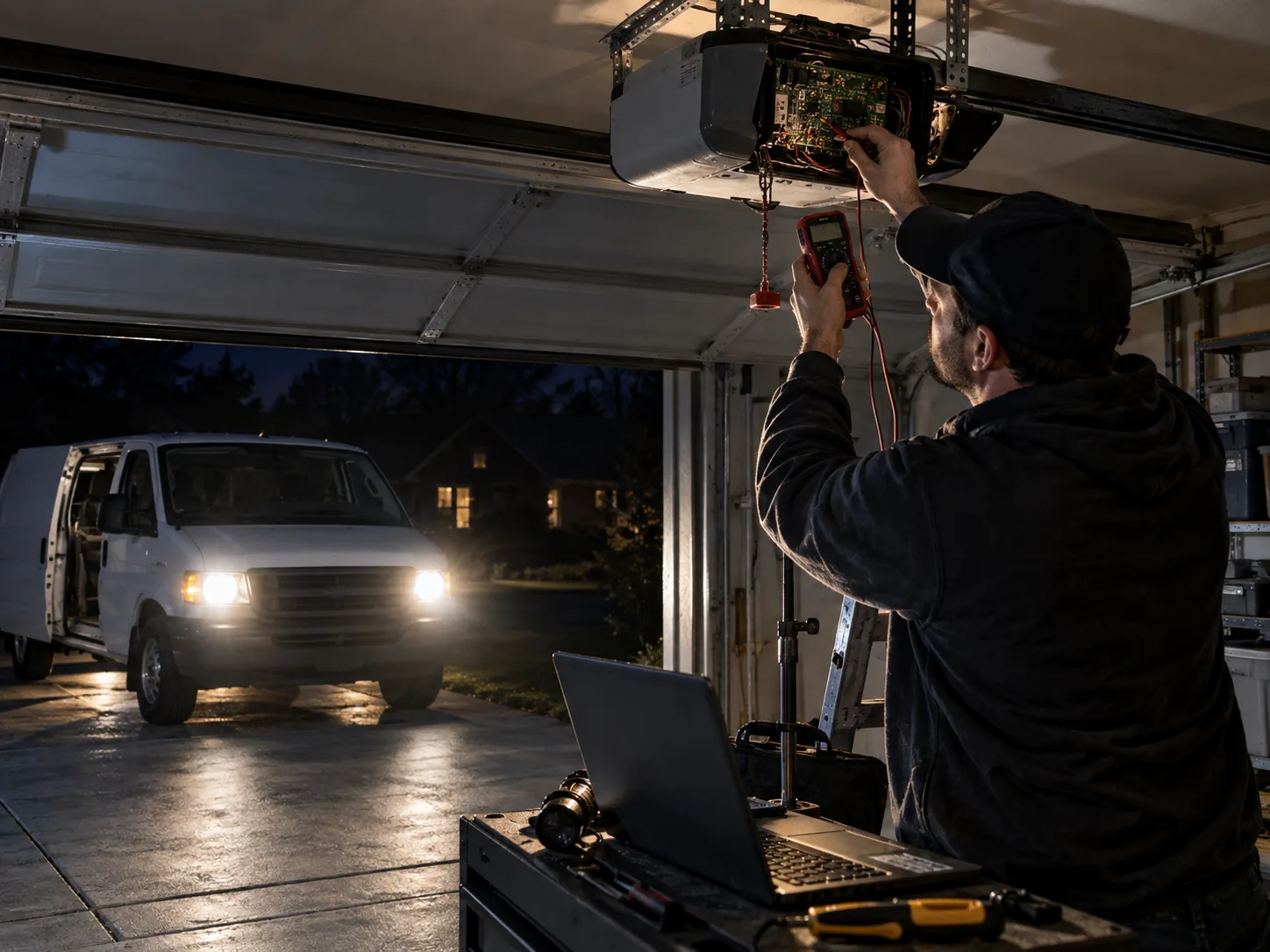
If it's an original chain-drive unit from a home built in the 1970s or 80s, repair is sometimes possible, but replacement parts for older logic boards can be hard to source. We'll tell you honestly if a new opener makes more sense than chasing a discontinued part.
We don't recommend it. Extension springs store enough tension to cause a serious injury if the cone slips while you're working. Lubrication and hardware tightening are fine DIY tasks; spring work under tension isn't.
Explore more
Ready when you are
Fond du Lac Garage Door Pros repairs and installs garage doors, springs and openers in Fond du Lac, WI and the surrounding area.