How Local Conditions Play In
Fond du Lac sits in a severe cold climate band, and that matters more for garage door openers than most people think. Cold snaps put real strain on the electrical side of a system - chain drives bind up when grease thickens, circuit boards draw more current trying to compensate, and the same ice storms that knock out power tend to hit right when you need the door working most, hauling in groceries or getting a car out for a shift start. A power cut in July is an inconvenience. A power cut here in January, with the door frozen shut and no opener backup, is a different problem. Most opener failures we see tied to outages aren't really about the outage itself - they're about a unit that was already running hot or wired loose, and the outage just finished the job. If your opener has never had a battery backup and you've lost power more than once this winter, that's worth addressing before it becomes an emergency call at 6am in a driveway full of snow.
The Problem
Housing across this service area was mostly built between 1938 and 1993, with the median landing around 1970. That means a large share of openers, if they haven't been replaced, are running on wiring and hardware from a different era - chain-drive units with no battery backup, disconnect switches wired straight into a circuit with no surge protection, and in some of the older homes, openers that predate any kind of rolling-code security at all. When the power drops on a unit like that, there's no graceful fallback. The motor stops mid-cycle, the door sits wherever it was, and if you don't know where the manual release cord is, you're stuck. Newer openers sold today mostly include battery backup as standard, but a 1970s-era house with its original 1990s opener replacement often doesn't have one. We can't tell you what era your specific opener is without seeing it, but if your house falls into that mid-century range and nobody's touched the opener in a decade or more, the odds are not in your favor during an outage.
When It Stops Being a DIY Job
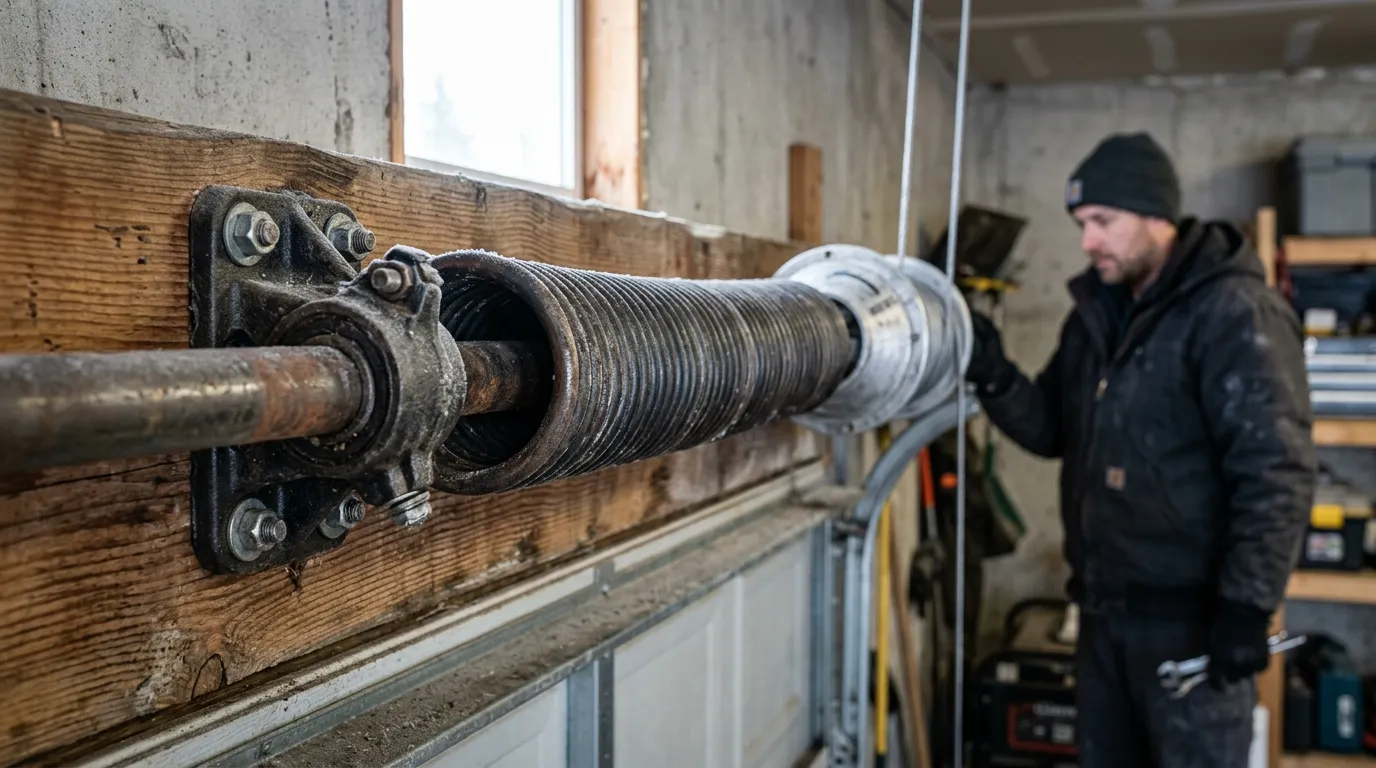
Pulling the manual release cord and lifting the door by hand during an outage is fine - that's what it's for. Rewiring a disconnect switch, replacing a circuit board, or adding a battery backup unit to an opener that wasn't built for one is not a weekend project, and we'll say plainly that we don't recommend it. Torsion springs under tension are the other line we draw hard: if a power cut happens while a spring is already worn and it lets go under manual operation, that's a serious injury risk, not a repair delay. If your door won't budge by hand even with the release pulled, stop pulling and call - that usually means a spring or cable issue underneath the power problem, and forcing it makes the eventual fix more expensive.
Checking It Yourself
Before you assume the worst, a few things you can check without tools. First, find the manual release cord - usually a red handle hanging from the trolley - and confirm it actually disengages the carriage; in older homes it sometimes hasn't been tested in years and can be seized. Second, if you do have battery backup, check the indicator light monthly; batteries in these units typically weaken over a few winters of cold storage before they fail outright, and cold makes a marginal battery fail faster than it would in a heated garage. Third, after any outage, watch the door's first few cycles once power's back - a hesitant reverse or grinding at the top of travel means the opener's logic board took a hit, even if it seems to be working. None of this fixes a bad spring or a worn cable, but it tells you whether the outage exposed a wiring problem or just interrupted a normal cycle.
Talk to a local pro
Garage door trouble in Fond du Lac?
Same-day service with honest, upfront quotes.