How Local Conditions Play In
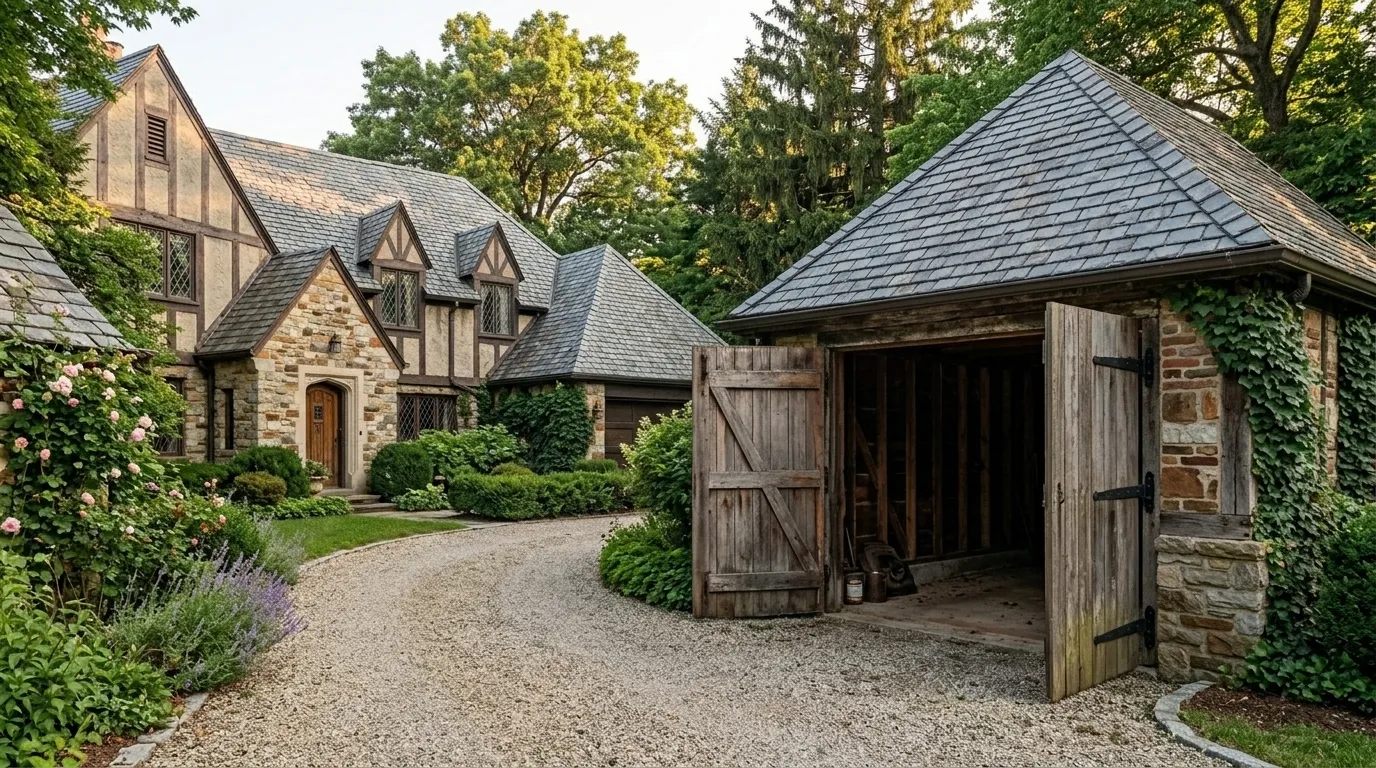
Most of the housing in Fond du Lac went up between 1938 and 1993, with the median build year landing around 1970, spread across two dozen named residential areas that mostly share that same 1960s-70s construction era. That matters for a service call because a door and opener installed when the house was built is often the original setup, or close to it, and it was built to a lower cold-weather standard than what's sold today.
Fond du Lac sits in a climate band rated cold, severe. That's not a marketing line, it's a factor in how steel behaves. Torsion springs wound decades ago lose tension faster once temperatures drop hard and stay down for weeks at a time. Steel panels and tracks contract in the cold, which tightens tolerances that were already loose from age. An opener drive gear built for a mild climate wears differently than one that's spent fifty winters here.
So when we get called out, the first question isn't just "what's broken," it's "how old is this door, and how has this house's winter history treated it." A door on a house built in 1970 gets diagnosed differently than one on a house from the 90s, even if the symptom sounds the same over the phone.
The Problem
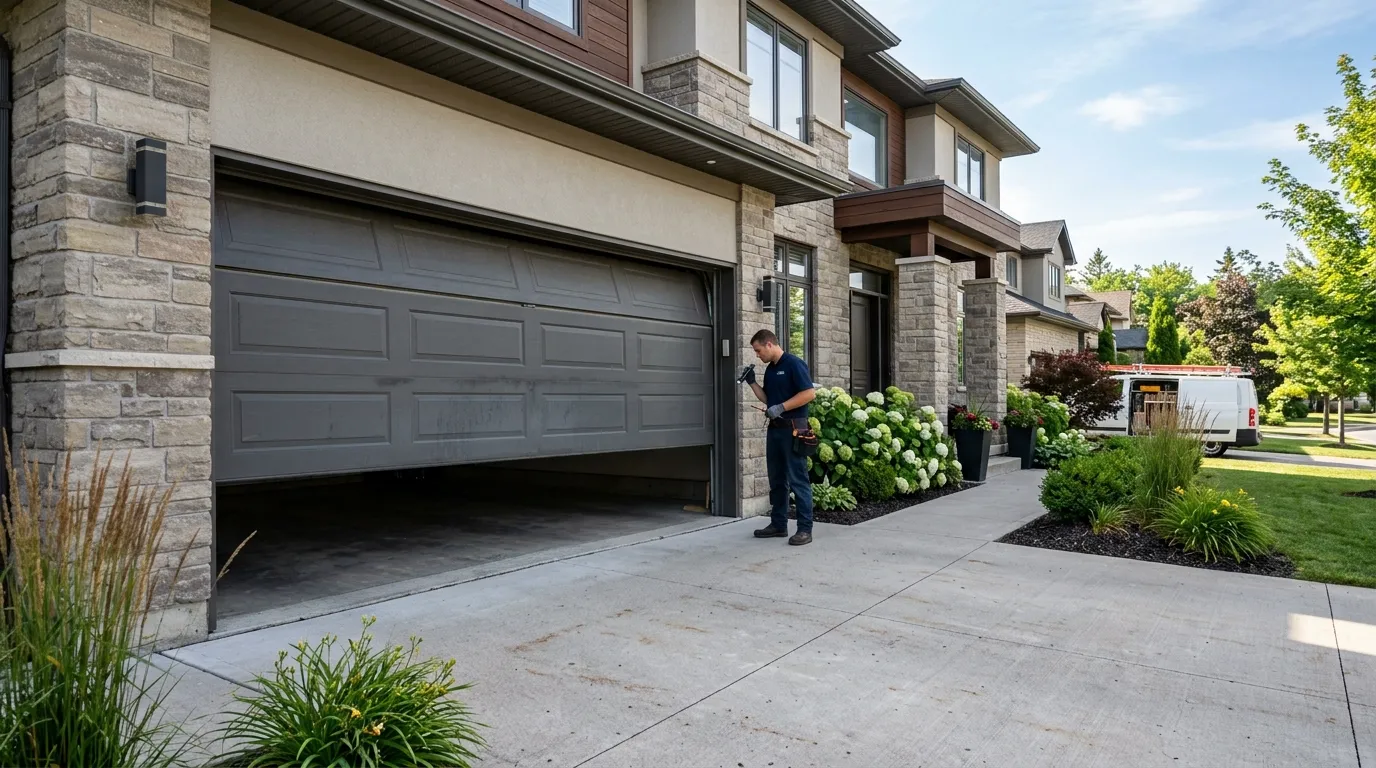
The complaint is almost always the same: the door won't open, or it opens partway and stops, or it slams down faster than it used to. What's underneath that complaint varies more here than it might elsewhere, because of how old the housing stock is.
Most of the garage doors in Fond du Lac's owner-occupied homes were installed when the house went up, somewhere between 1938 and 1993, with the median build year sitting at 1970. That median build year of 1970 means a lot of the openers and torsion hardware in this city predate the parts that box stores carry today. A torsion spring sized for a door built fifty years ago doesn't always match what's stocked on a truck, and finding the right wind and wire gauge can take an extra call to a supplier.
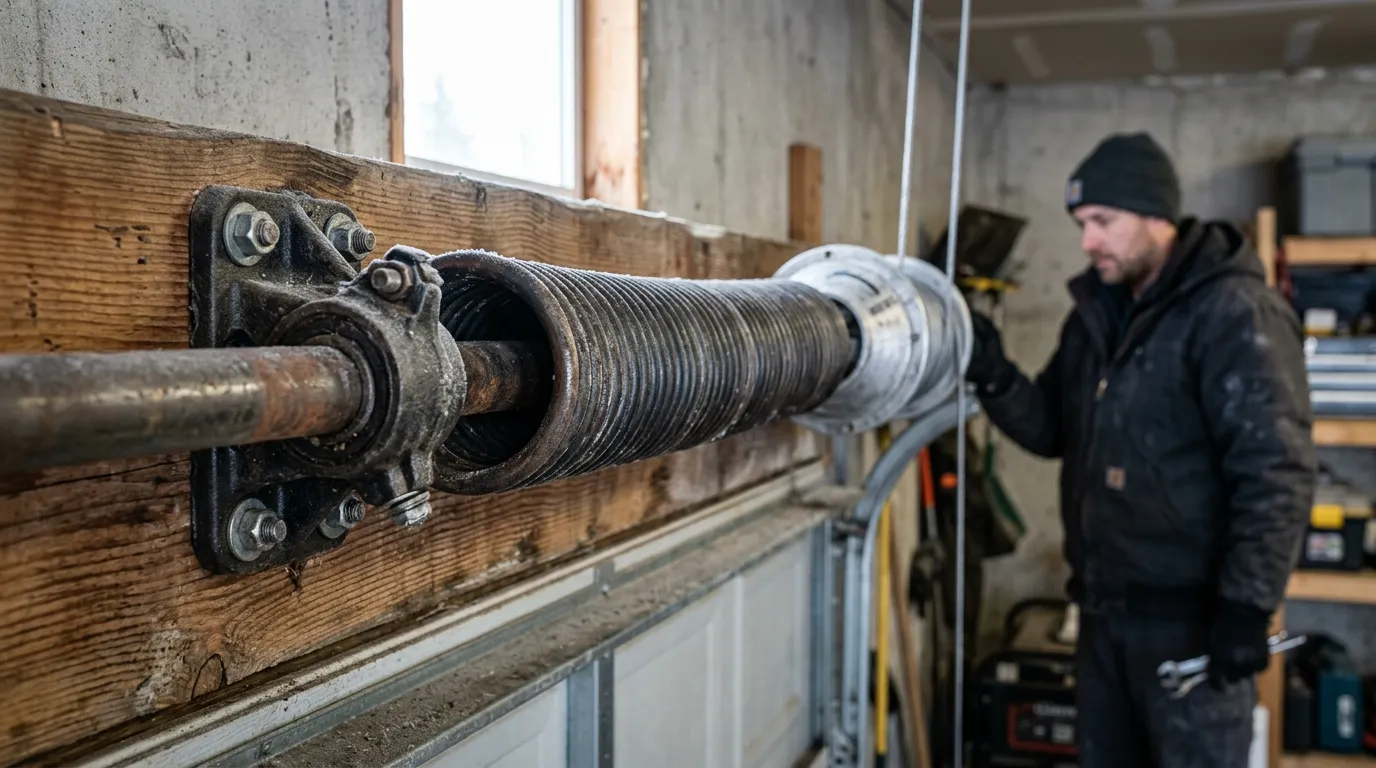
Cold makes the underlying wear show up faster. Fond du Lac sits in a cold climate band rated severe, which means steel torsion springs here lose tension faster than in a mild climate. A spring that's been fine for years can go from "a little slow" to "snapped" in one hard cold stretch, especially on a door that's already carrying thirty or forty years of cycles.
That's the actual problem underneath most calls: age of hardware plus a climate that speeds up fatigue.
When It Stops Being a DIY Job
Some things are safe to check yourself. A broken spring is not one of them. If the door won't budge, drops suddenly, or one side hangs lower than the other, stop pulling the release cord and call. Torsion springs are wound under enough tension to break a hand, and that risk doesn't go down because the door is old and cheap-looking.
Across the 24 named residential areas that make up most of this city's 1960s and 70s housing stock, the same side-mounted torsion setups show up call after call, and a lot of those doors are now past the point where patching makes sense. With 14,521 owner-occupied houses in the service area, most of them built before 1993, a service call in Fond du Lac usually starts with checking whether the spring size even matches what's on the door anymore, and whether the drum, cable, and bearing plate have kept pace or are all due at once.
With median household income at $90,361 across the area, replacement often pencils out better than another round of patch repairs on a door that's already outlived its original hardware twice over. That's a judgment call we make on site, not over the phone.
One honest limit: we don't carry every obsolete panel style from that era on the truck. If your door is an odd discontinued design, expect a lead time on the panel itself, even if the spring and cable get fixed same day.
Checking It Yourself
There's a short list of things worth looking at before you call anyone. Pull the emergency release with the door closed and lift by hand. It should move smoothly with one hand and hold roughly halfway open on its own. If it drops or you're fighting it, the springs are off balance and that's not a tighten-a-bolt fix.
Look at the cables running down either side of the door. Fraying, kinks, or rust flaking off in strands means replace, not oil. Check the weatherstripping at the bottom panel too - in a cold, severe climate, a gapped seal lets frost and wind straight into the garage, and that's a $20 fix compared to everything else on this page.
Listen to the opener. Grinding, a delay before it engages, or the light blinking without the door moving usually points to the drive gear or the logic board, not the door itself. Wipe old grease off the tracks and rollers and give them a light coat of the right lubricant before the hard part of winter, not after the first cold snap already found the weak spot.
What you shouldn't do: loosen or adjust the torsion spring bolts yourself. That's the one step on this list that belongs to a service call, every time.
Talk to a local pro
Garage door trouble in Fond du Lac?
Same-day service with honest, upfront quotes.